
Is A Solar Battery Worth It In 2025?
Is A Solar Battery Worth It In 2025?
Key Points:
- If you use power at night and plan to stay put, a battery could be a great investment.
- Feed-in tariffs have dropped to as low as 0.04c/kWh. Storing your own energy is now far more valuable than selling it back.
- New federal rebates cover up to 30% of the battery’s cost but they reduce each year.
- A well-sized battery could save you $1,200–$1,500 per year, with a payback in 7–10 years.
- Batteries also offer energy independence and backup power during outages.
- Rebates aren’t automatic. Work with an installer who helps you claim every dollar.
- Now is a smart time to consider a battery, before the rebate reduces and FiTs drop further.
As Australia transitions to a smarter, more decentralised energy future, solar batteries are playing a growing role in helping households reduce grid reliance, stabilise energy costs, and maximise solar self-consumption.
In Victoria, the economics are shifting rapidly. Feed-in tariffs have declined by more than 90% over the past decade, and grid electricity prices continue to rise.
At the same time, a new federal rebate covering up to 30% of battery installation costs is making storage systems more financially viable than ever.
But is a solar battery the right investment for your home in 2025?
This guide provides a clear, data-backed analysis of:
- Why storing your solar is now more valuable than exporting it
- How the new federal battery rebate works and how to maximise it
- Real-world savings data, payback periods, and battery costs in 2025
- Who benefits most based on energy habits, household size, and solar setup
- Whether it’s better to wait (and why for some, that’s the smarter option)
Let’s take a closer look at the numbers and whether adding a battery makes financial and practical sense for your household.
Tired Of High Bills And Low Feed-in Tariffs?
Until recently, solar batteries were financially out of reach for many households. But that landscape has changed dramatically, and 2025 is shaping up to be one of the best times to invest. Here’s why:
- Feed-in Tariffs (FiTs) have plummeted by 99%.
In VIC, rates have dropped from 33c/kWh to as low as 0.04c/kWh. That means you’re now getting next to nothing for exporting your solar back to the grid. You are better off saving energy to use during peak times. This is for minimum flat feed‑in tariffs from 1 July 2025 (some retailers may have slightly higher FiTs depending on location or contract). - New 30% Federal Battery Rebate.
Under the updated Small-scale Renewable Energy Scheme (STCs), you can now get ~30% off your battery system upfront (applied as a discount through an approved solar battery installer). That’s about $3,500 on a 10 kWh battery. Bigger systems mean bigger savings, with discounts of up to $17,500 on a 50 kWh battery. - Rising electricity costs.
Energy prices have continued to climb across Victoria. Batteries help shield you from volatile retail rates by letting you store and use your own power. - BONUS: Battery systems can offer blackout protection.
- Feed-in Tariffs (FiTs) have plummeted by 99%.
Some batteries now come with integrated backup capability, allowing you to power essential circuits during grid outages. This added resilience is particularly valuable in areas with frequent power disruptions, or for households seeking greater energy security.
Understanding The Real Savings From A Solar Battery
Real-Life Example: Feed-in Tariff vs Battery
Let’s say your system generates 10kWh of excess solar per day. Here’s what that power is worth depending on what you do with it:
Option
Value Per Day
Value Per Day
Sell to grid (FiT)
$0.004
~$1.46/year*
Store & use it
$3.30
~$1,200/year
That’s the difference between pocket change and real bill savings.
Batteries give you back control and turn your solar into long-term value.
But Aren’t Batteries Expensive?

It’s true, solar batteries represent a significant upfront investment. But like solar panels a decade ago, the economics have shifted dramatically in recent years. Prices have come down, system quality has improved, and most importantly, the new federal rebate covers up to 30% of the installed cost, applied upfront as a discount.
When you combine this with rising electricity costs, declining feed-in tariffs, and a strong return on stored solar energy, many Victorian households are now seeing payback periods of 7–10 years or even faster for homes with high evening usage or electric vehicles.
Here’s a quick look at how the numbers typically stack up:
- Average 10 kWh system cost (without rebate): $10,000–$15,000
- Average rebate (30%): $3,000–$4,500
- Net out-of-pocket: $7,000–$10,000
- Typical annual savings: $1,200–$1,500
Payback period: 7–10 years (faster if you use more energy at night)
Is A Solar Battery Right for You?
A solar battery can be a smart investment, but like any energy upgrade, it depends on your circumstances. While some households see fast payback periods and major long-term savings, others might be better off waiting for now.
Let’s walk through how to assess if a battery suits your needs.
Key Factors to Consider
- Your long-term plans for the home
If you’re planning to stay put for the next 7–10 years, you’ll likely see full value from your battery investment. That’s the typical payback period, so short-term homeowners may not benefit as much. - Your energy usage patterns
Do you use a lot of electricity after sunset? Think cooking, heating, cooling, EV charging, or work-from-home equipment. Batteries help you store excess solar and use it during peak demand times when grid electricity is most expensive. - Existing solar system
If you already have solar panels, you’re halfway there. A battery helps you store energy you’d otherwise export for cents and use it yourself instead, increasing your solar self-consumption and savings. - Desire for energy independence
Concerned about rising power bills or blackouts? Modern batteries offer backup during outages and give you more control over your energy usage, especially with unpredictable weather or grid instability. - Your current solar usage
If you’re already using most of your solar energy during daylight hours (e.g. you’re home all day and use major appliances then), you may not have much left to store which means the value of a battery could be reduced. - Your night-time usage
Households with low evening consumption might struggle to justify the investment right now, unless they’re looking for blackout protection or preparing for future EV charging needs.
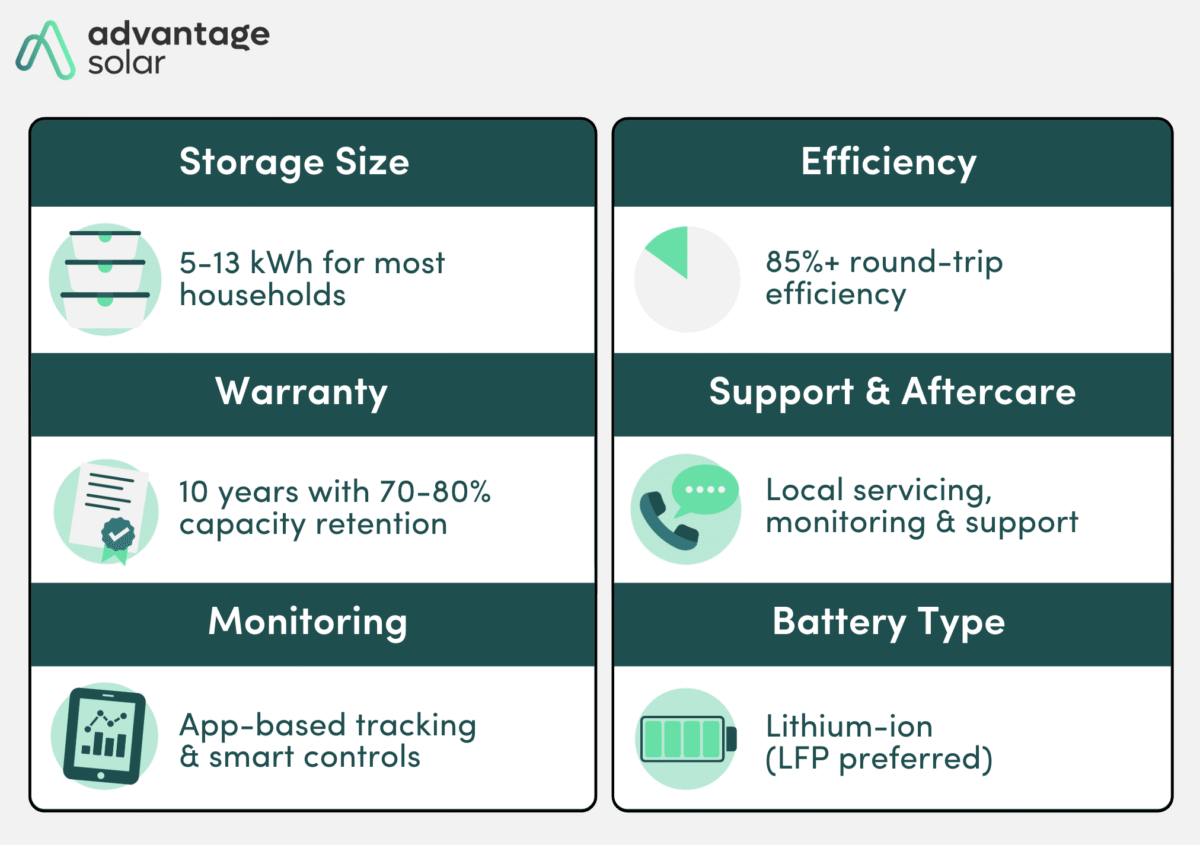
Quick Decision Guide
Does Household Size Matter?
Yes, the size of your household and your overall energy usage are key factors in determining whether a solar battery will deliver strong financial returns.
Larger households typically see greater benefits.
More people in the home often means higher energy usage, particularly in the evenings when batteries really shine. Think cooking dinner, laundry, multiple devices charging, heating or cooling, and entertainment systems all in use after sunset.
More consumption = more stored energy used = more savings.
A family of four or five, for example, may easily consume 10–15 kWh of energy each evening. If your solar system generates enough surplus during the day to cover that, a 10–13 kWh battery can help offset most of your peak-time grid usage, potentially saving $1,000+ per year.
Smaller households can still benefit, but the savings may take longer to add up if evening usage is modest. In these cases, it’s especially important to assess your night-time energy profile before investing.
Ready To Find Out If A Battery’s Right For You?
If you’ve made it this far, chances are a solar battery could be a smart move especially with rebates at their highest and feed-in tariffs at their lowest.
Get personalised solar battery advice to see how much you could save, what rebates you qualify for, and which system is right for your home.
FAQ: Solar Battery
- When does the solar battery rebate end in Victoria?
The federal rebate is available nationwide under the STC program and reduces every year until 2030. The sooner you apply, the more rebate you get. - What is the federal solar battery rebate?
It’s a government incentive that reduces the cost of eligible battery systems by around 30%, applied upfront by your installer as a discount. - How much does a solar battery cost in Australia?
The average price (before rebates) ranges from $10,000 to $15,000, depending on size, brand, and features. After rebates, many households pay $7,000–$10,000 out of pocket. - What size battery do I need for a 6.6kW or 10kW solar system?
That depends on your usage, not just your panel size. A 6.6kW system may pair well with a 10–13kWh battery for evening usage. Always size based on your actual power needs. - What are the best solar battery brands in Australia?
Popular options include Sofar, Sungrow, Sonnen, Tesla Powerwall, SolarEdge, and BYD. Each has pros and cons depending on budget, features, and warranty. - How long do solar batteries last?
Most modern batteries last 10–15 years, with warranties covering at least 10 years or a minimum throughput. - Can I add a battery to an existing solar system?
Yes, most batteries are compatible with existing solar setups, though you may need an inverter upgrade or hybrid system design. - Is a solar battery really worth it?
For many Victorian homes, yes. Especially if you use energy at night, want backup during blackouts, and want to future-proof your bills. - Can I add a battery to an existing solar system?
Absolutely. In fact, most of our battery customers already have panels. - What If I don’t have existing solar panels?
You can absolutely still install a solar battery. Many Victorians are choosing to do this now to take full advantage of upfront rebates on both the solar system and the battery (potentially saving thousands).
Table of Contents