
How Much Can You Save with Solar Panels in Australia?
How Much Can You Save with Solar Panels in Australia?
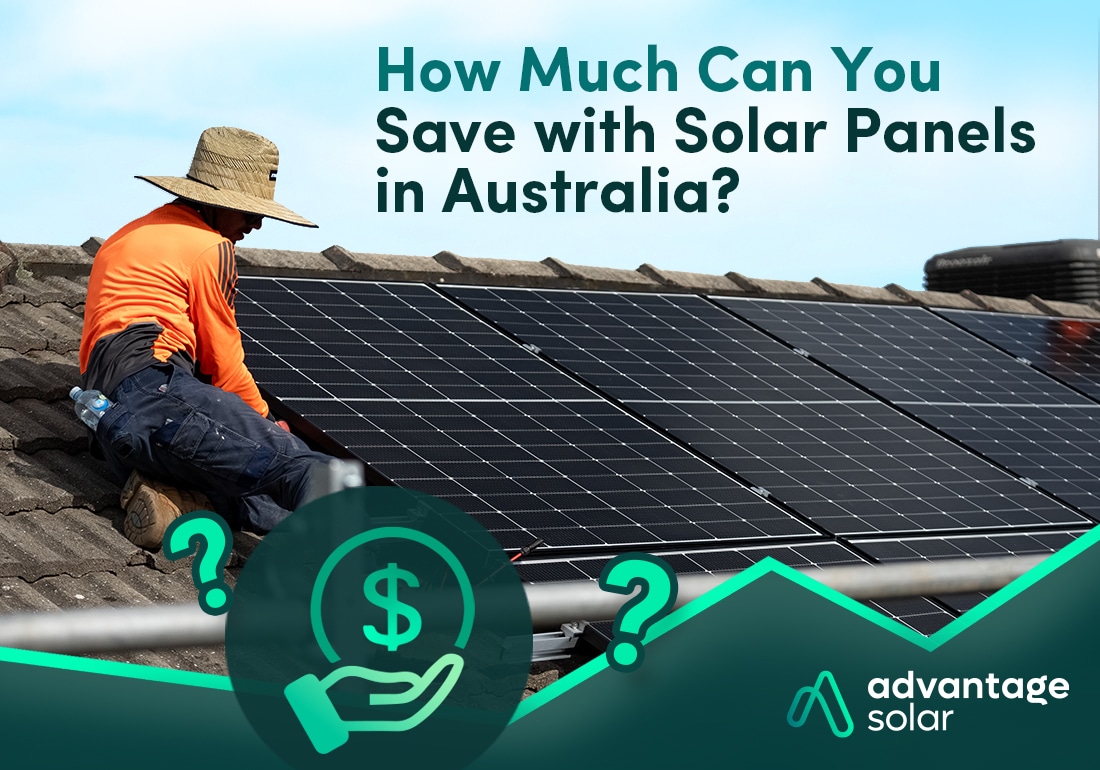
If you live in Australia, solar panels can significantly reduce your electricity bills. Most households save around $1,000 per year with a standard solar system, while homes with battery storage may reduce energy costs even further, up to about $2,000.
However, actual savings vary from one household to another. Factors such as system size, available rebates, battery storage, Feed-in Tariffs (FiTs), and household energy usage all affect your results.
What Affects Your Solar Savings in Australia

Your actual solar savings depend on a few key factors, such as system size, battery vs no battery and Feed-in Tariffs (FiTs). Understanding these will help you estimate your real return.
Factor
|
Potential Impact on Savings |
|
System Size |
|
Larger systems can generate more electricity and reduce reliance on grid power. |
|
Battery Storage |
Allows excess solar energy to be used at night, reducing grid electricity purchases.
|
Feed-in Tariffs (FiTs) |
|
Higher FiT rates can increase the value of excess electricity exported to the grid. |
System Size
Large solar systems generally generate more electricity. For example, a 6.6kW solar system is one of the most commonly installed residential system sizes in Australia.
Because larger systems can generate more electricity than smaller systems, they often provide greater opportunities for bill savings when household energy usage supports it.
|
System Size |
|
Suitable For |
|
Savings Opportunity |
3kW
|
Smaller households |
|
Lower electricity generation and savings potential |
5kW
Average households
|
Balanced generation and bill savings |
|
6.6kW |
|
One of Australia’s most common residential sizes |
|
Strong savings potential for many households |
|
10kW+ |
|
Larger households with higher energy usage |
|
Greater generation and potential bill reductions |
Households that use more electricity during the day are often able to maximise the value of larger solar systems because they consume more of the energy generated on-site rather than purchasing electricity from the grid.
Battery vs No Battery
Adding a battery allows households to store excess solar energy generated during the day and use it later in the evening.
This can reduce reliance on grid electricity and increase the amount of solar energy used within the home.
Households with just solar panels save around $1,000 per year on energy bills. With battery storage, annual savings can range from $2,000 to $4,000 by making greater use of on-site solar energy.
Actual savings will vary based on energy usage, system size, and local electricity rates.
While battery systems involve a higher upfront cost, they can improve long-term energy independence and help maximise the value of a solar system.
Feed-in Tariffs (FiTs)
Feed-in Tariffs determine how much homeowners are paid for exporting unused solar electricity back to the grid.
FiT rates vary between states and electricity retailers, meaning the value of exported energy can differ significantly.
Higher FiT rates can increase overall solar savings, particularly for households that generate more electricity than they consume during the day.
In Victoria, Feed-in Tariff (FiT) rates are typically around 5 to 10 cents per kWh, depending on the electricity retailer and the minimum rate set by regulators (rates can change over time).
Example of how FiTs reduce electricity bills:
A household exports 20 kWh of excess solar energy per day back to the grid
If the FiT rate is 6.5 cents per kWh, the household earns:
20 kWh × $0.065 = $1.30 per day credit
Over a month:
$1.30 × 30 days = $39 credit per month
Over a year:
$39 × 12 = $468 in bill credits
Federal and State Rebates for Solar Panels in Australia
Solar rebates in Australia are available at both the federal and state levels, and they can significantly reduce the upfront cost of installing a system.
Federal rebate (STC scheme)
The federal government offers a national incentive through the Small-scale Renewable Energy Scheme (STC program).
For a typical 6.6kW residential solar system, the STC incentive may reduce upfront costs by approximately $2,000-$3,000, depending on the installation location and current certificate value.
State rebates (vary by region)
In addition to the federal incentive, different states offer their own programs:
- Victoria: Eligible households may receive up to $1,400 in rebates for solar panel installations and additional support for battery systems through state programs.
- New South Wales (NSW): Offers interest-free loans and incentives for solar and battery installations under certain schemes.
- Queensland (QLD): While direct rebates are limited, households benefit from strong Feed-in Tariffs and support for renewable energy adoption.
Because each state has different programs and eligibility rules, the total benefit can vary significantly depending on where you live.
It is important to check both federal and local state incentives before installing a system, as these programs can change over time.
Solar Batteries Make Savings Even Bigger
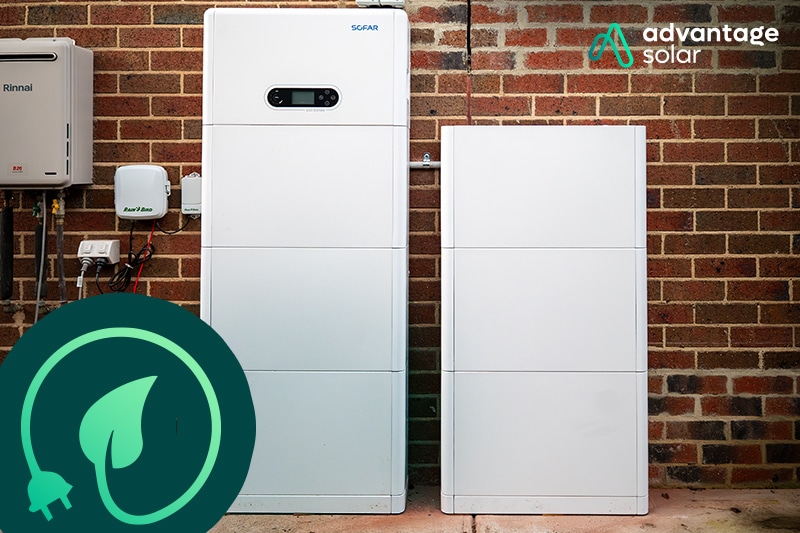
A lot of people ask us, “Do I really need a battery with my solar panels?” And the answer is: it can significantly change how much you save, but it depends on your energy usage and goals.
Feature
|
Solar Panels |
|
Solar Panels + Battery |
|
Daytime Power Use |
|
Uses solar energy while the sun is shining |
|
Uses solar energy while the sun is shining |
|
Night-Time Energy |
|
Draws electricity from the grid at night |
|
Stored solar energy can be used at night |
|
Peak Electricity Price |
|
More exposure to evening peak rates |
|
Can reduce reliance on expensive peak-time electricity |
|
Excess Solar Energy |
|
Often exported back to the grid |
|
Can be stored for later household use |
|
Energy Independence |
Partial
|
Greater energy independence |
|
Blackout Protection |
|
No backup power |
|
Some systems can provide backup during outages |
|
Typical Savings Potential |
|
Around $1,000 |
|
Annual savings range from $2,000 – $4,000 |
Homeowners often tell us that adding a battery can save them between $2,000 – $4,000. When you compare that to panel savings, it’s easy to see why many households are now looking at batteries as the next step after solar.
How Long Does It Take for Solar Panels to Pay for Themselves?
The amount of time it takes for solar panels to pay for themselves, often called the payback period, depends on factors such as system cost, electricity usage, local weather conditions, and future energy prices.
According to industry estimates, many Australian households achieve a solar payback period of approximately 3 to 6 years, depending on system size, electricity usage patterns, local energy prices, and available rebates.
Households that use more electricity during daylight hours often achieve faster payback because they consume more of the solar energy they generate.
Solar Is Not Just About Saving Money

Yes, the savings are amazing. But there is something else people love once they go solar. Peace of mind.
There is something comforting about knowing your home is producing clean energy every day. You are less affected by rising electricity prices, less dependent on the grid, and doing something positive for the environment that your kids and grandkids will grow up in.
Every solar panel installed helps reduce carbon emissions and supports a cleaner future for Australia. It is a smart financial decision, but it is also something you can feel genuinely proud of.
Choosing the Right Solar Company Matters
Here is the truth: not all solar companies are the same.
A cheap system might sound tempting, but poor-quality panels, rushed installations, and weak warranties can cost you much more in the long run. That is why working with experienced local professionals matters so much.
At Advantage Solar, we believe going solar should feel simple, exciting, and stress-free. We help homeowners clearly understand their options, choose the right system for their needs, and maximise every available rebate.
Whether you are interested in residential solar panels, solar batteries, or a complete solar power setup for your home, our team is here to guide you every step of the way.
Final Thoughts: Is Solar Worth It in Australia?
For most Australian homes, the answer is a massive yes. Lower power bills, government rebates, energy independence, potential battery storage, and long-term savings all make solar one of the smartest home upgrades you can make today.
And the sooner you start, the sooner you begin saving.
If you have been thinking about installing solar panels, now is the perfect time to explore your options. Visit Advantage Solar, and see how much you could save each year .
Because in Australia, sunshine is not just something we enjoy. It is one of the best investments you can make.