Are Solar Panels Still Worth It After Rebates Drop?
Are Solar Panels Still Worth It After Rebates Drop?
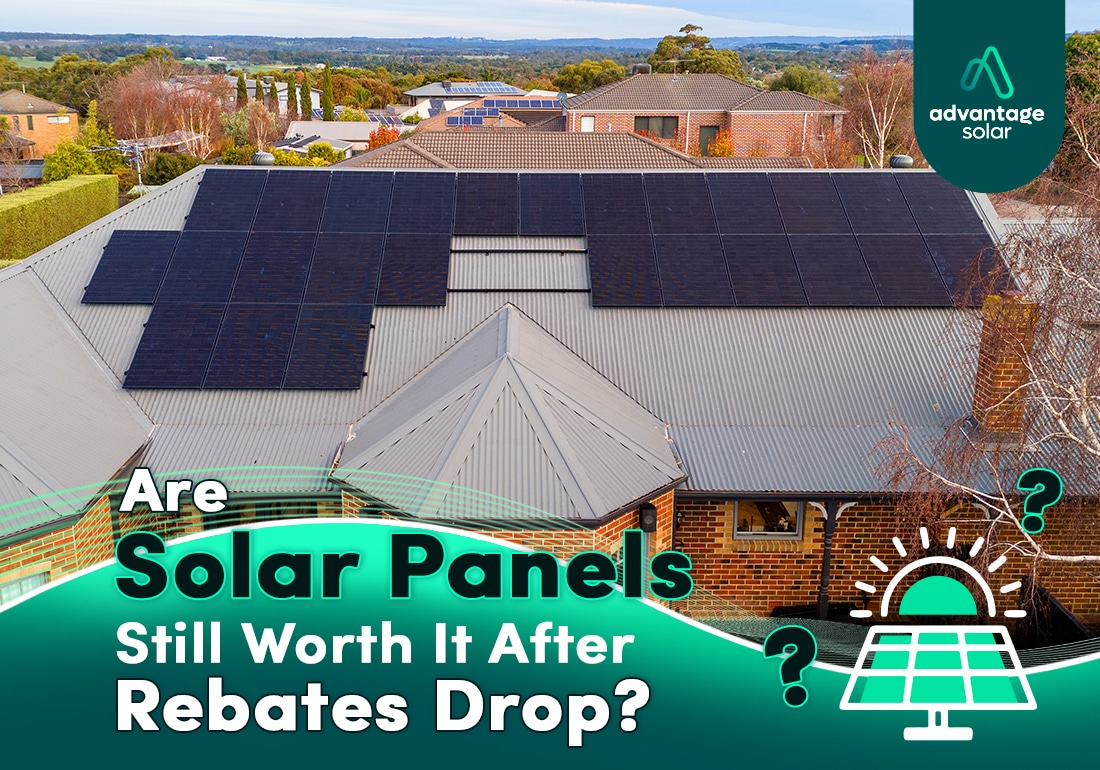
Many Australians are asking the same question right now.
Are solar panels still worth it after rebates drop?
The short answer is yes.
Even though solar rebates are getting smaller over time, solar energy is still one of the best ways to lower household electricity bills.
Power prices remain high across Australia, and many homeowners are looking for ways to reduce long-term energy costs.
A solar system can still save thousands of dollars over its lifetime. Many Australian households can save about $1,200 per year on electricity bills.
In many cases, homeowners can recover the cost of their solar panel installation within 3 to 6 years. After that, much of the electricity produced by the system is essentially free.
Why Are Solar Rebates Dropping?
Many people think the solar rebate is a one-time government payment. In reality, the main Australian solar rebate comes through the Small-scale Renewable Energy Scheme, also known as the SRES.
Under this program, eligible solar systems receive Small-scale Technology Certificates, often called STCs. These certificates help reduce the upfront cost of solar panel installation.
However, the scheme was designed to reduce gradually over time.
According to the Clean Energy Regulator, the number of certificates available decreases each year until the scheme ends in 2030. This means the value of the solar rebate becomes smaller as time goes on.
The goal is to encourage early adoption while recognising that solar technology has become more affordable over the years.
So yes, rebates are dropping. But that does not automatically mean solar power is no longer worth it.
Solar Panels Cost Less Than They Did Years Ago
One important fact many people overlook is that solar systems are much cheaper today than they were a decade ago.
The price of solar panels, inverters, and installation has fallen significantly over the years. Improvements in manufacturing and technology have made solar energy more accessible for Australian households.
Because of these lower equipment costs, many homeowners can still install solar panels at a reasonable price even when rebates are smaller.
In simple terms, the rebate is shrinking, but the technology has become more affordable and efficient.
How Solar Panel Prices Vary by System Size
System size in kilowatts is the top factor influencing your solar cost. Bigger systems cost more initially, but they generate electricity in line with that extra cost. They usually give you a better per-watt deal because labour is a one-time expense spread across additional panels.
Size
Before STCs |
STC Rebate |
After STCs |
Annual Savings |
5kW
$5,250 |
$2,100-$3,200 |
$3,000-$5,000 |
$1,100-$1,600 |
6.6kW |
$6,930 |
$2,800-$4,200 |
$4,000-$6,500 |
$1,500-$2,500 |
8kW |
$8,400 |
$3,400-$5,100 |
$5,000-$8,000 |
$1,800-$2,800 |
10kW |
$10,500 |
$4,200-$6,300 |
$6,000-$10,000 |
$2,200-$3,400 |
13kW |
$13,650 |
$5,400-$8,200 |
$7,500-$13,000 |
$2,800-$4,200 |
Electricity Prices Continue to Rise
The amount of time it takes for solar panels to pay for themselves, often called the payback period, depends on factors such as system cost, electricity usage, local weather conditions, and future energy prices.
According to industry estimates, many Australian households achieve a solar payback period of approximately 3 to 6 years, depending on system size, electricity usage patterns, local energy prices, and available rebates.
Households that use more electricity during daylight hours often achieve faster payback because they consume more of the solar energy they generate.
How Much Can Solar Panels Save?
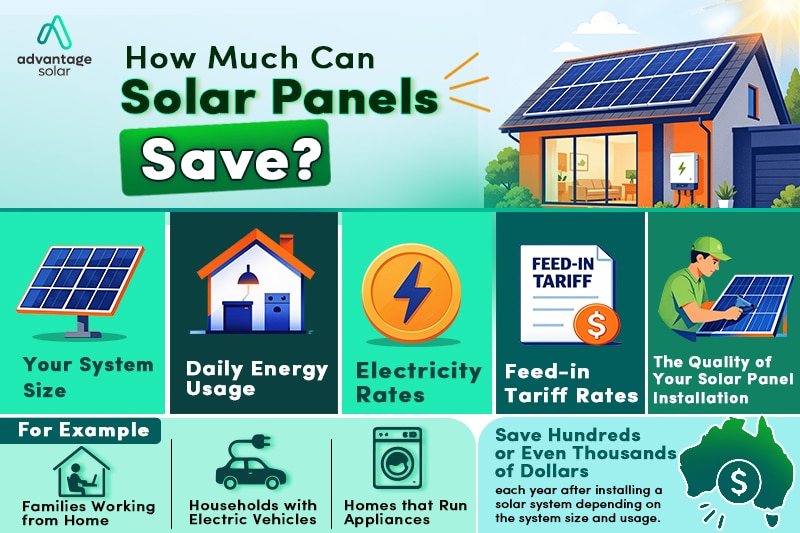
The amount you save depends on several factors, including:
- Your system size
- Daily energy usage
- Electricity rates
- Feed-in tariff rates
- The quality of your solar panel installation
Homes that use a lot of electricity during the day often see the biggest savings. This is because they can use more of the solar power they generate instead of buying electricity from the grid.
For example, families working from home, households with electric vehicles, or homes that run appliances during the day may benefit more from solar energy.
Many Australian households save hundreds or even thousands of dollars each year after installing a solar system, depending on the system size and usage.
Feed-In Tariffs Are Lower Than Before
One area that has changed is feed-in tariffs.
Years ago, some Australians received very generous payments for exporting extra solar power back to the grid.
Today, feed-in tariffs are generally lower.
Because of this, modern solar systems work best when homeowners use more of their solar electricity during the day rather than exporting large amounts to the grid.
Simple habits can help increase savings:
- Run washing machines during daylight hours
- Charge electric vehicles during the day
- Use dishwashers when solar production is high
- Schedule pool pumps during sunny periods
Using your own solar power often provides greater value than exporting it.
Are Solar Batteries Worth Considering?
Many homeowners are now exploring battery storage alongside solar panels.
A battery allows you to store excess solar energy generated during the day and use it later at night.
This can increase energy independence and reduce reliance on the grid.
Feature
Solar Panels Only |
|
Solar Panels + Battery |
Daytime Savings |
Uses solar energy generated during the day |
Uses solar energy generated during the day |
Night-Time Electricity |
Purchases electricity from the grid |
Uses stored solar energy before drawing from the grid |
Self-Consumption |
Lower
Higher
Reliance on Grid Power |
Moderate |
Lower
Annual Savings |
Save around $1,200 |
Save between $2,000-$4,000 |
Typical Payback Period |
Around 3-6 years |
Around 6-10+ years |
Backup Power |
No |
Available with some battery systems |
However, batteries are usually more expensive than solar panels alone. Their payback period is often longer.
Multiple Australian industry sources estimate payback for solar panels around 3-6 years and solar + battery around 6-10 years, depending on usage patterns and rebates.
For some households, a battery makes sense because they want backup power during outages or greater energy security. For others, a solar-only system may provide the strongest financial return.
Environmental Benefits Still Matter
Financial savings are often the main reason people install solar panels, but environmental benefits remain important too.
Solar energy is a renewable energy source. It produces electricity without burning fossil fuels and helps reduce greenhouse gas emissions.
By choosing solar power, households can reduce their carbon footprint while contributing to a cleaner energy future.
Why Acting Sooner Can Make Sense
Because the solar rebate continues to reduce each year, waiting may not always save money.
While solar technology may become even more efficient in the future, homeowners who install solar now can begin saving on electricity bills immediately.
Every month spent without solar is another month of paying full retail electricity prices.
In many situations, starting those savings sooner can outweigh any future reduction in equipment prices.
How to Get the Best Value From Solar

If you want the strongest return on investment, consider these tips:
Choose Quality Products
A cheaper system is not always the best choice. Reliable panels and inverters can provide better performance and durability over the long term.
Use an Experienced Installer
A quality solar panel installation helps ensure the system operates efficiently and safely.
Match the System to Your Needs
Bigger is not always better. A system should be designed around your household’s energy usage.
Maximise Self-Consumption
The more solar energy you use directly, the greater your savings are likely to be.
Review Available Rebates
Federal and state programs can change. Always check what incentives are available before making a decision.
Final Verdict: Is Solar Still Worth It?
Yes. While rebates are gradually decreasing, solar panels continue to offer strong long-term savings for many Australian households.
Choosing a quality system and a trusted installer such as Advantage Solar can help you get the most value from your investment.